
7min read
Founded by Louis-François Cartier (1819 – 1904) in 1847, the company was ultimately split in three semi-autarch entities, each lead by one of Louis-François’ three grand-sons: Louis took over the flagship store in Paris, Jacques managed the boutique in London and Pierre was responsible for Cartier New York. The modern history of Cartier takes a turn in 1964, when Pierre the last of the three brothers passed away. Starting from then the Paris, London and New York branches operated as completely separate entities with considerable creative independence. The Paris branch was sold to Harry Lee and Edward J. Danziger, two American Investors also nicknamed ‘the Danzinger brothers’. Cartier London remained in the Cartier family and was led by Jean-Jacques Cartier, while the New York branch was gradually taken over by American investors already starting 1962 by acquiring shares of the company: 28%, 1962; 33.3% by 1967. (1, 2, 3)
While Cartier London became creatively adventurous with the development of the model ‘Crash’ and other unconventional designs, Cartier New York oriented towards the American market with more cosmopolitan variations of the Parisian design language (1).
Cartier Paris as Forerunner
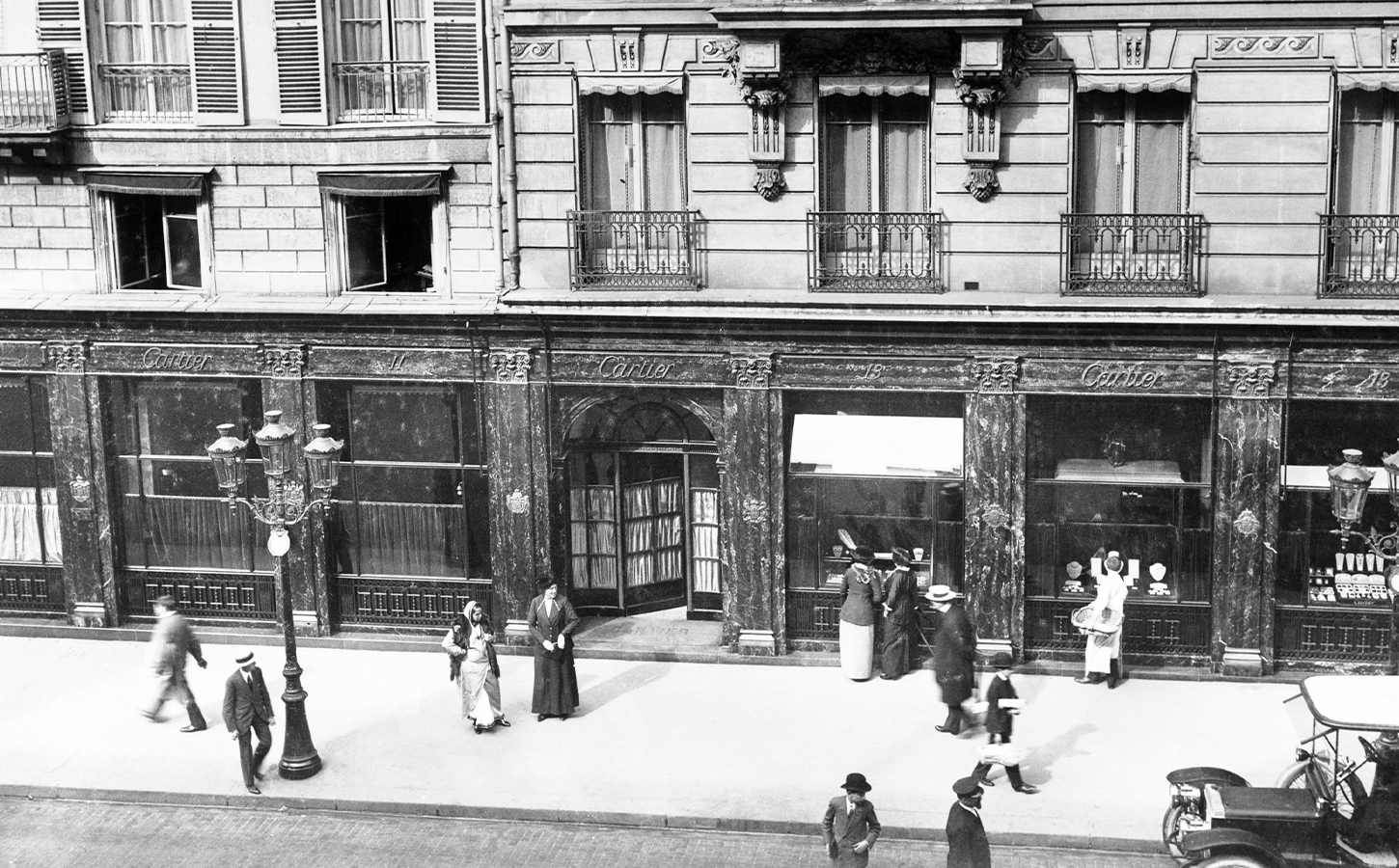
By the mid 1960s Cartier Paris experienced progressively declining sales and in order to redress the financial difficulties it was decided to follow the business model introduced by the fashion designer ‘Pierre Cardin’ which involved offering licensing arrangements (1, 5).
The most promising licence was granted to entrepreneur Robert Hocq in 1968. Hocq was head of the ‘Silver Match cigarette lighter company’ and was then licensed to produce Cartier lighters. The resulting gold plated oval lighter with Cartier signature was a huge success, as for the first time a product bearing the name of the ‘jeweller of kings and king of jewellers’ was affordable also by the rising middle classes. The success was reflected by a 700% increase in sales in just three years (1, 5).
1969 Hocq recruited Alain-Dominique Perrin to work at the ‘Briquets de Cartier’ division and it took only one year to appoint him to managing director of this lucrative business unit. Building on the success of Cartier’s lighters, Robert Hocq, together with a group of investors led by Joseph Kanoui, acquired the Paris flagship store in 1972. The same group acquired Cartier London in 1974 and Cartier NY in 1976, reuniting the boutiques again to one Maison: ‘Cartier Monde’ (1).
Les Must de Cartier
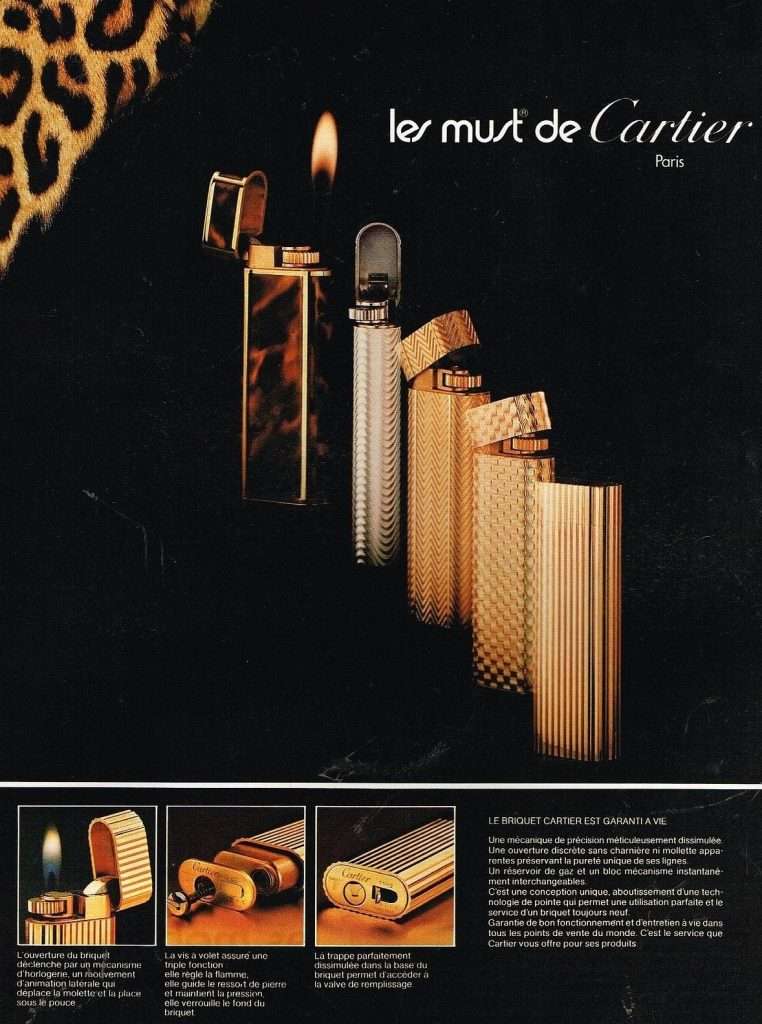
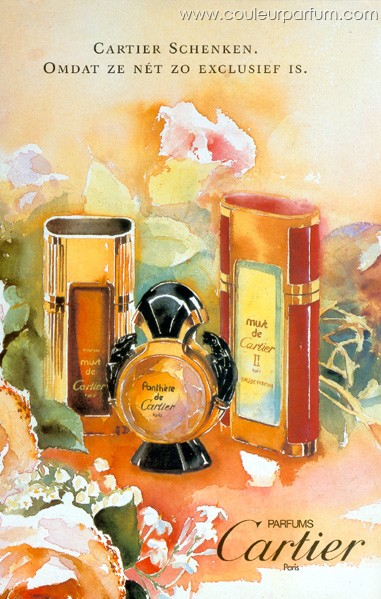
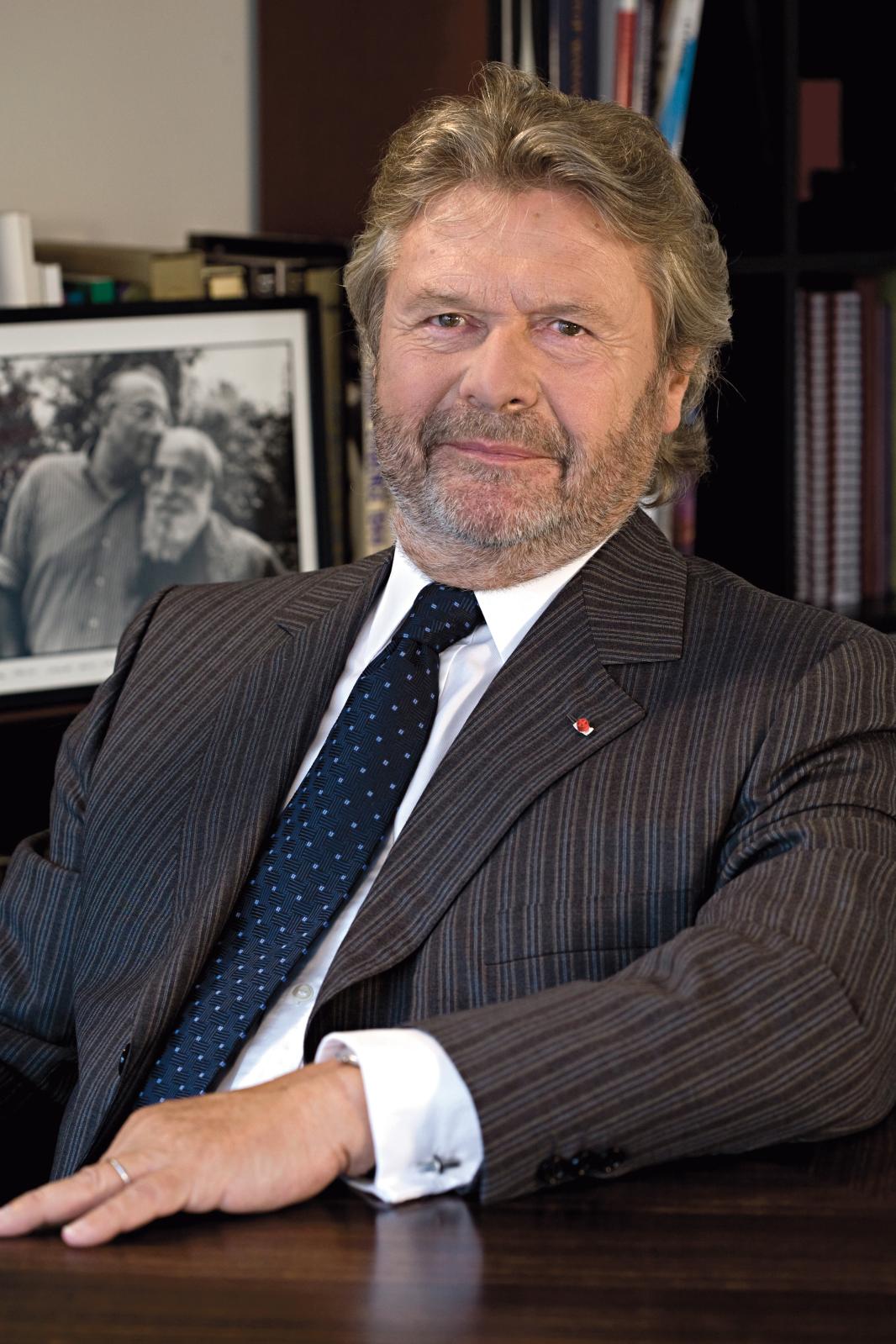
During the preparation for the acquisition of Cartier Paris, Hocq asked Perrin to think about a long term strategy. During nine months Perrin and his team produced the famous ‘petit livre rouge’. This proposal discussed the development strategy around ‘Les Must de Cartier’, a reformulated slogan which was used for promoting the lighters, but which now would be transformed into a brand with corresponding products and its own distribution strategy. Upon approval by Hocq, he and Perrin subsequently refined the idea together (4).
The refined strategy would include a further development of the concept introduced with the lighters by presenting a whole range of more affordable products, which led to the arrival of Cartier leather goods, pens and perfumes and later also watches (1).
Cartier Watches of the 1970s
Cartier’s watches leaving the Paris facility were traditionally assembled locally, cased in Paris made gold cases and featuring Swiss movements. In 1972, the watch division experienced a strategic adaptation. Cartier shifted the core of watch manufacture from Paris to La Chaux-de-Fonds and selected Ebel as Swiss manufacturing partner. Ebel was thought to be able to implement Cartier’s much larger watchmaking ambitions, by bringing production to industrial scale. However, Cartier retained responsibility for the product and brand design direction while Ebel supplied the Swiss industrial infrastructure (12).
At the beginning, as the jewellery, also the watches remained within the limitations of the traditional luxury concept, being fabricated in precious metal, but in order to comply with a more modern design language the model line was broadened. This was done by introducing more daring case shapes and more size variations to account for differentiated style preferences in male and female clients.
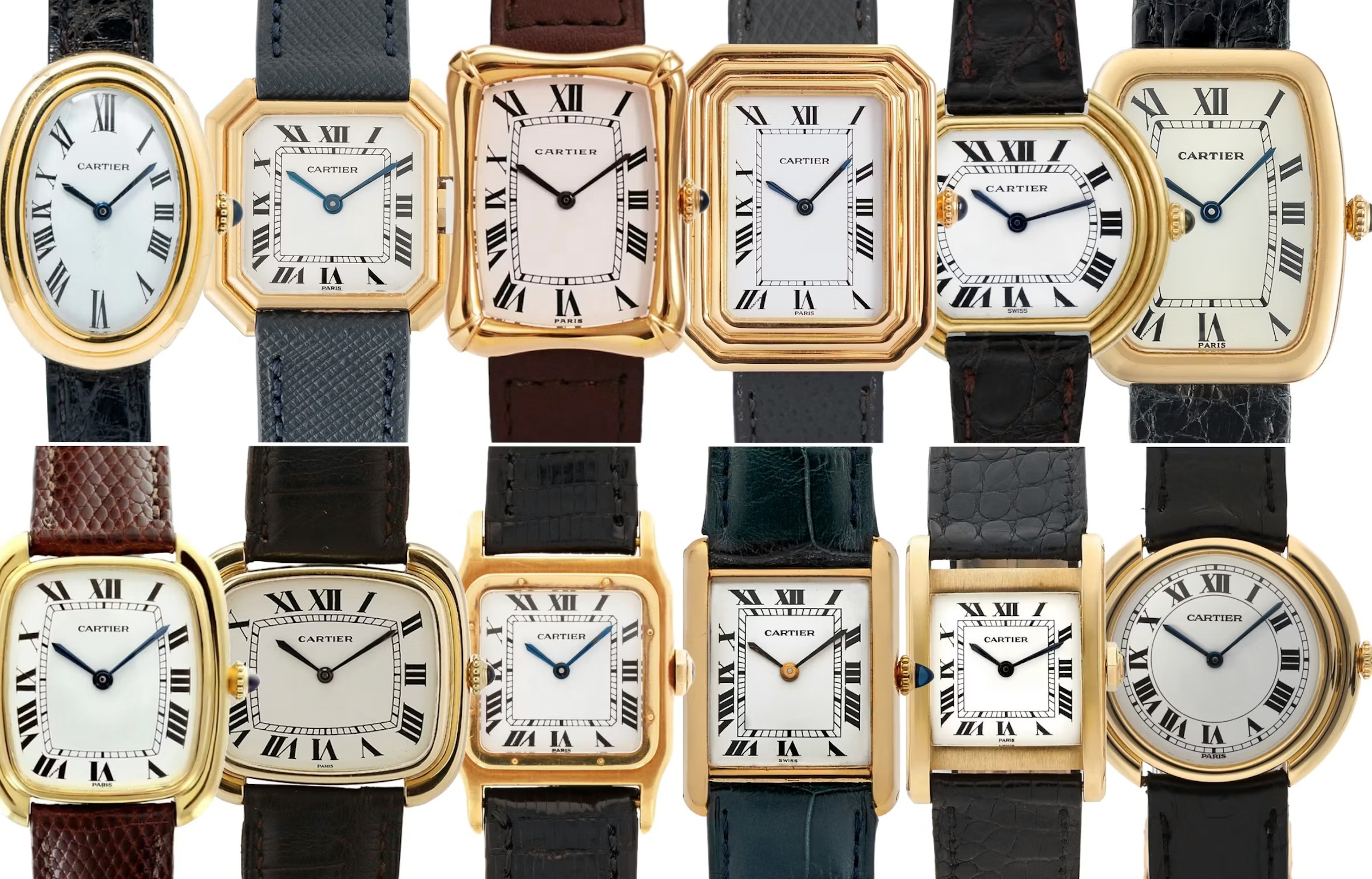
However, by 1975 it was established, that the rising success of Cartier was mostly due to the ‘Les Must de Cartier’ line and thus Perrin’s revolutionary, strategic reorientation of Cartier. Perrin had defined new, modern commercial and strategic objectives for Cartier. He understood, that with the new global dynamism, Cartier could not survive past the 1970s as pure luxury brand and envisioned to broaden Cartier’s offering by selling watches using less noble materials, enabling the Cartier name to further expand as wide spread lifestyle brand with many of its products, now including watches, being affordable by less wealthy people. The iconic ‘Tank’ model was chosen to be simplified, slightly redesigned and offered in different sizes with different dials and cased in gold electroplated brass. In 1976 Perrin was appointed CEO of the ‘Les Must de Cartier’ division, where he forged also the idea to reintroduce the legendary ‘Santos’ model, but in steel / gold and with an integrated bracelet.
In retrospect Perrin’s new strategy might be regarded as logical and straight forward, but these were revolutionary and extremely risky moves, as Cartier never used these ‘basic’ materials for its watch output before, with the exception of a bakelite cased ‘Santos’ model in the 1930s and the sale of a small amount of steel cased watches during WWII.
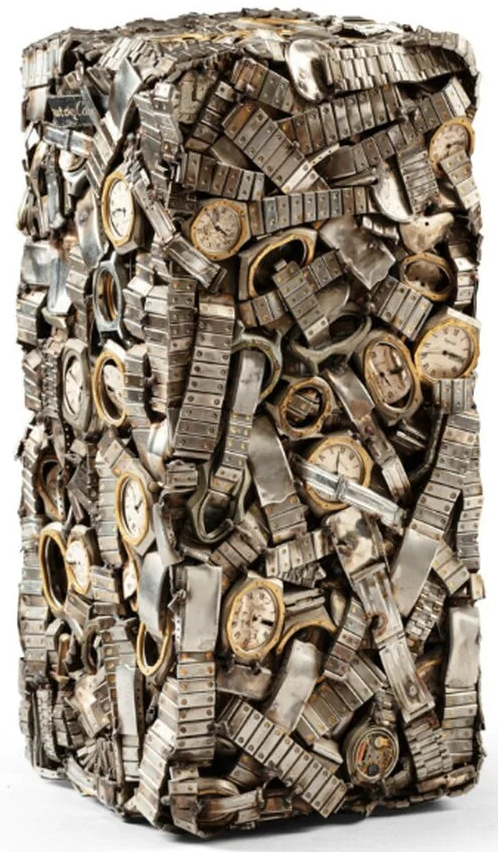
The enormous success encountered by introducing watches made out of base metal starting 1975, triggered also the parallel market for watch forgeries. This might have been the main drive behind the decision to stop the production of such watches in 1976 and introduce ‘The Must’ series in gilt sterling silver in 1977. With the corresponding silver hallmarks these watches became more difficult do copy, especially as fraudulently imitating hallmarks adds more important potential criminal charges for the copyists. In Basel in April 1985 and in New York in 1986 Cartier made a bold statement against fakes by destroying thousands of counterfeit watches with a steamroller.
Some new Cartier models were also proposed with quartz calibers, all derived from the output of Ebauches SA, as were the mechanical calibers, but nicely finished and rebranded. Overall these new, again more affordable watches, were an immense success also through the 1980s and beyond, where Cartier watches started to be widely featured in Hollywood movies.
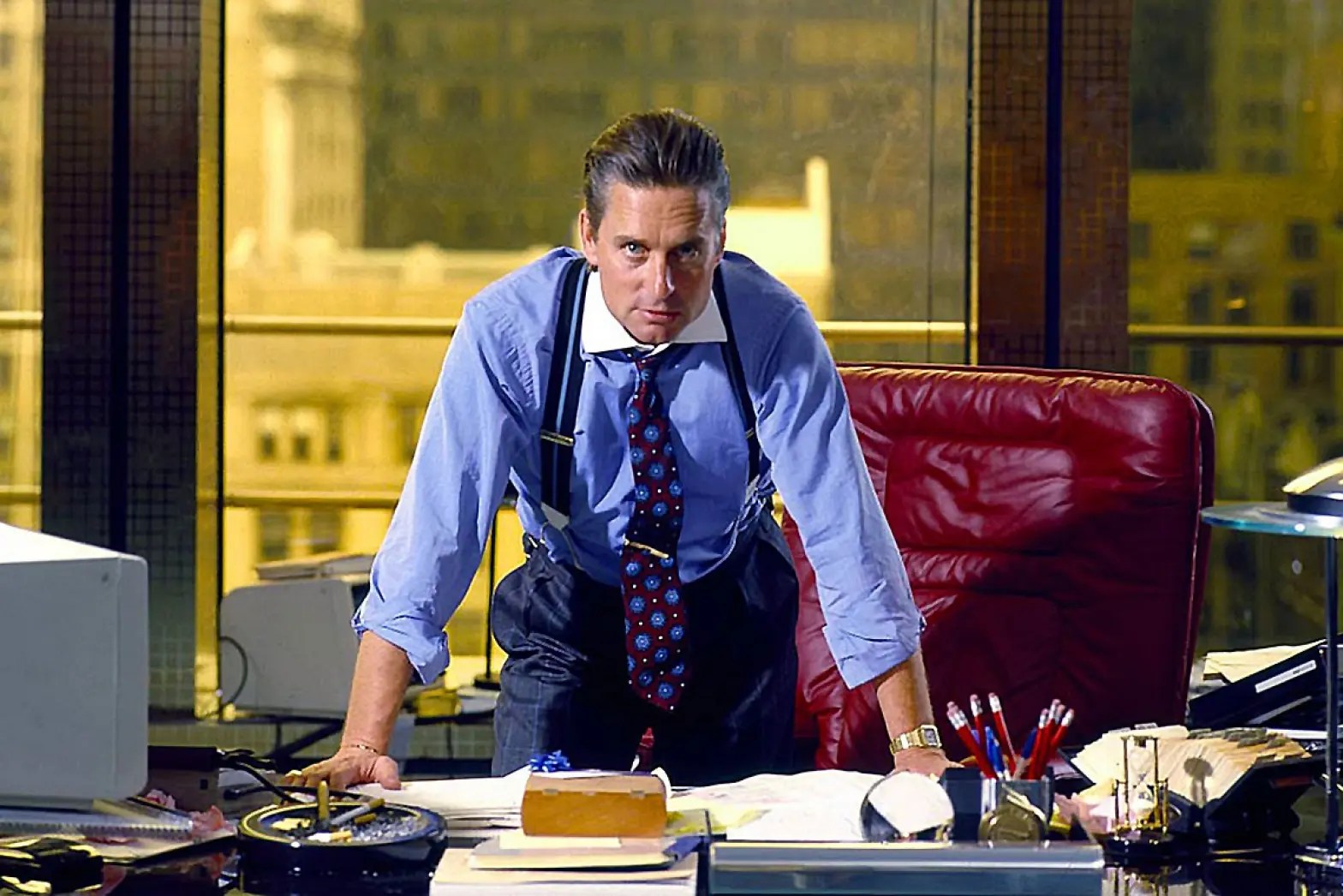
Celebrities such as Michael Douglas and Andy Warhol would wear expensive, precious metal versions, but now the growing middle class would be able to afford a real Cartier watch with the same aesthetics for a fraction of the price of a precious metal version. This way the traditional brand identity expanded, reinforcing the brand’s new vision of accessible luxury and consolidating the new fashion driven strategy.
A variant of Perrin’s strategy would also be used by Nicolas Hayek starting 1983 for positioning the revolutionary Swatch watch among the fashion ‘musts’ of its time.
Ref.:
- Watchpro
- F. Cartier Brickell, The Cartiers: The Untold Story of the Family Behind the Jewelry Empire. New York: Ballantine Books, 2019.
- Time
- Jeune Createur
- Ivg-Vicenza
- Carier Paris Archives, Taponier – through My Watch
- Lorologiese
- The Non Blonde
- Hodinkee
- Montres de Luxe
- 2018 Cartier et Compagnie SNC – through Gazette Drouot
- Cartier
- Entertainment Weekly – through Wristcheck

